Photograph Red-crowned Cranes, a Japanese Cultural Icon
At Tsurui Ito Tancho Sanctuary, you'll be able to capture these amazing birds performing their winter "dances", a pair bonding ritual ahead of the breeding season.
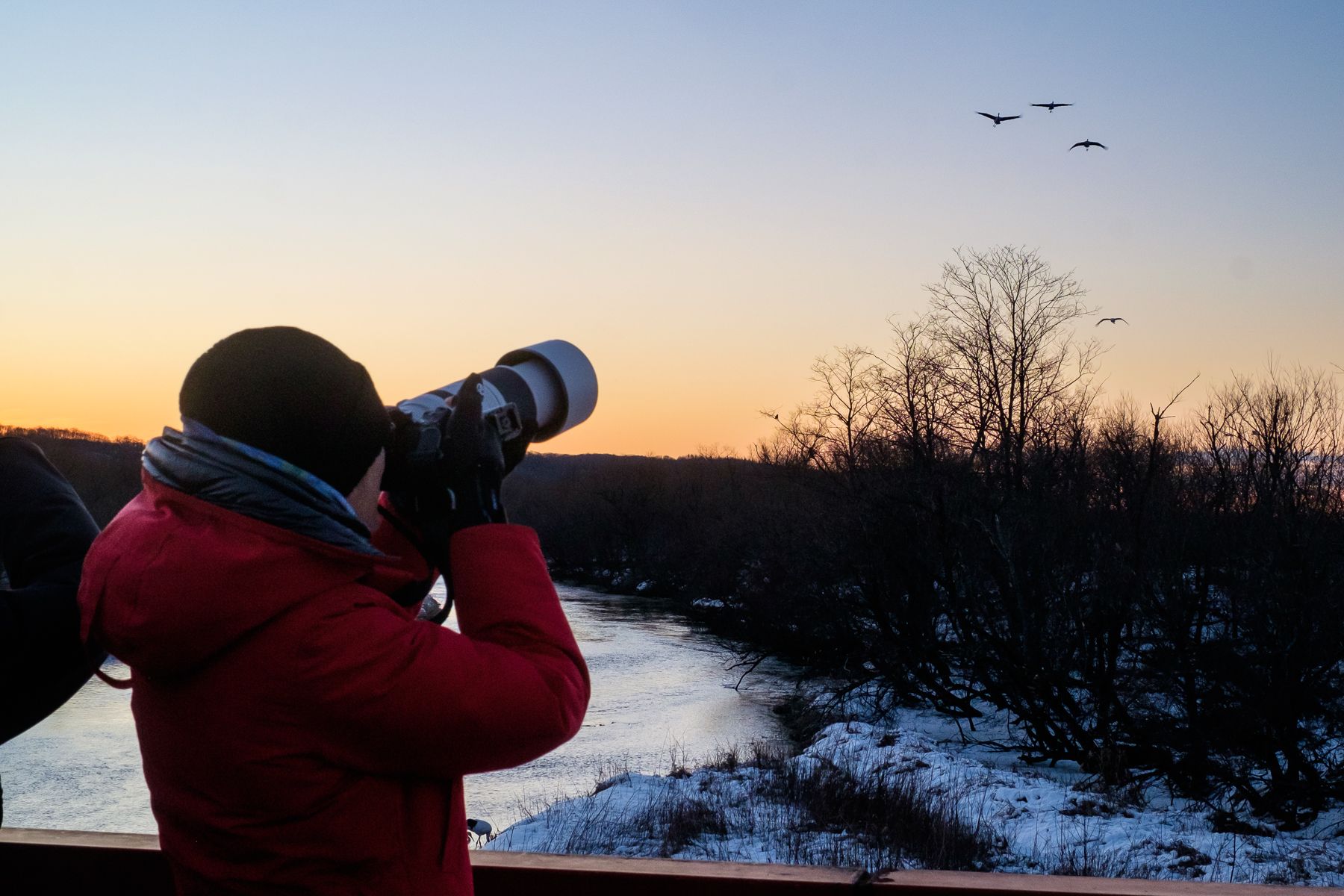
Join us for a photography adventure around East Hokkaido. With your camera in hand, you’ll capture incredible shots of Red-crowned Cranes, Steller’s Sea Eagles and other charming creatures emblematic of Hokkaido’s magical winter.
Hokkaido’s far east region is often described as the last unexplored frontier of Japan. This region is popular for wildlife and outdoor lovers in the summer. It is also renowned internationally in winter as a bird-watching and wildlife photography destination.
On this tour, we will visit some of Hokkaido’s beautiful national parks to capture amazing shots of some of the best wildlife the region has to offer. We will watch the world’s heaviest eagle soar overhead, marvel at the dancing cranes and see deer and foxes roaming an incredible Ramsar Site.
Bundled up warm and with your camera in hand, we’ll make sure that you take plenty of shots that will take pride of place in your portfolio. Join us for an incredible photography adventure in Hokkaido’s magical winter!
At Tsurui Ito Tancho Sanctuary, you'll be able to capture these amazing birds performing their winter "dances", a pair bonding ritual ahead of the breeding season.
Steller's Sea Eagles are a winter visitor to the Shiretoko Peninsula, commonly found on the drift ice located off of the coast of Rausu. They're often joined by ospreys and White-tailed Eagles. We'll take a cruise out to the drift ice on a small boat, which will give us plenty of space and privacy to photograph these amazing birds.
As a Ramsar Site, the Notsuke Peninsula is home to dozens of wildlife species. Favourites among photographers are the charming Red Fox and the herds of Japanese Deer.
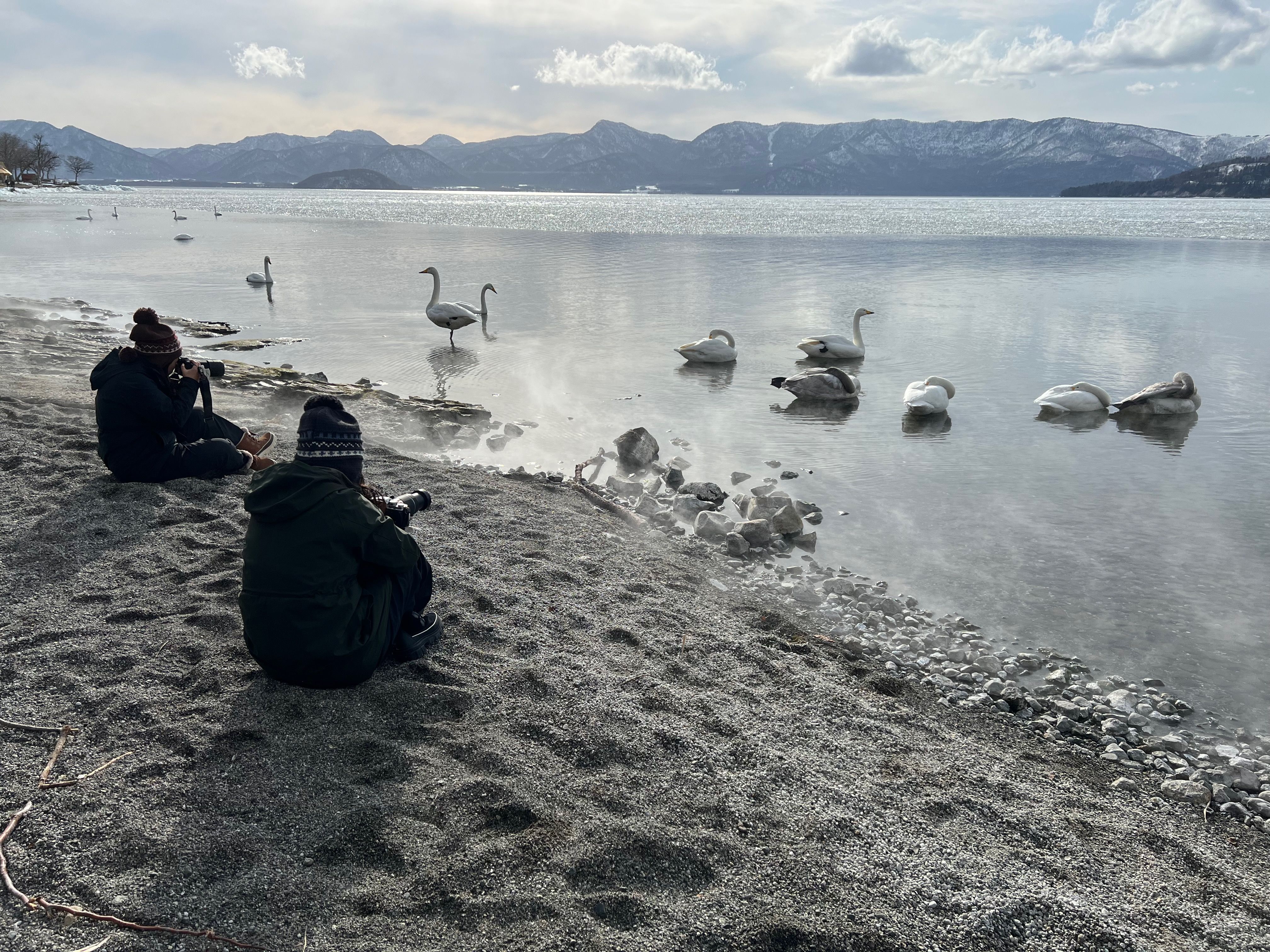
Migrating Whooper Swans make a stop on the hot spring shores of Lake Kussharo to warm themselves up. Being in such proximity to these graceful birds creates multiple photography opportunities.
On this tour, you'll have several opportunities to photograph the awe-inspiring Blakiston's Fish Owl, revered as the guardian of villages in Ainu spirituality. Its rarity makes it a challenge for even the most seasoned photographer!
We will meet at 4:00 pm at our hotel near Lake Abashiri on Hokkaido’s eastern Sea of Okhotsk coast. Once everyone is gathered, we will make our way to a park in Abashiri City that is renowned for its population of small birds and mammals. Along the way, we will spend some time getting to know each other, practising our photography and getting used to Hokkaido’s frigid conditions for our upcoming adventure before dinner at our accommodation tonight. There will be time after dinner to get your gear and photography set up in advance of tomorrow.
This morning we will we make our way from Abashiri to Rausu Shiretoko, keeping our eyes peeled for wildlife along the way.
After an early dinner in Rausu, we will make our way to an observatory for the Blakiston’s Fish Owl. The world's largest owl, they make for a unique photography subject. Keep in mind that it is impossible to know if and when the owls will turn up and entry times to the observatory are strictly regulated to keep the environment suitable for the owls. We will leave the observatory as a group if the owl is not present.
After visiting the observatory, we’ll head back to the hotel.
We’ll be up before dawn today, ready to depart our accommodation at 5:00 am for a nature cruise among the ice floes to see the majestic Steller’s Sea Eagle. Our boat is a small, charter boat that will put us on the same eye level with these incredible creatures. The unsheltered boat will be on the cold water’s surface for a full 2 hours, so you must wrap up warm!
If the cruise is cancelled due to adverse weather, waves or sea ice conditions, we can try a departure later in the morning or wait until tomorrow’s cruise (no refund will be given for cancelled cruises).
After returning to our accommodation for breakfast, you’ll have the rest of the day at leisure or you can join your guides for an optional afternoon outing. In the evening, we'll reunite for dinner at your accommodation.
This morning, we have another opportunity to head out at dawn to photograph Steller's Sea Eagles, this time on a larger cruise boat. Today's cruise also serves as contingency if yesterday's cruise was cancelled. If today’s cruise is also cancelled, we will do our best to reschedule for later in the morning or try to find an alternative activity (no refund will be given for cancelled cruises).
After the cruise, we will return to our accommodation for breakfast and will make our way to the Notsuke Peninsula, a very large sand spit sticking out into the icy Nemuro Strait. This unique ecosystem is home to all kinds of wildlife, including Japanese Deer, Red Foxes, Steller's Sea Eagles and White-tailed Eagles. We’ll spend the rest of the day photographing here, awaiting the peak of wildlife activity after 3 pm. Once we’re finished for the day, we’ll depart for our accommodation in Yoroushi Onsen.
This evening also offers another opportunity to photograph the Blakiston's Fish Owl, which occasionally feeds in the river behind our lodging. There is again no guarantee that the owl will appear, but the comfortable sofas and large windows in the hotel lobby make it an easy place to wait up for them.
Before breakfast this morning, we’ll have the opportunity to visit the Notsuke Peninsula again, where we may be able to see the deer locking antlers during their rut. We’ll return to our accommodation for breakfast, where bird feeders and food platforms outside the dinning room window attract birds and small mammals.
After breakfast, we head to Lake Kussharo in Akan–Mashu National Park. Lake Kussharo is the largest caldera lake in Japan and migrating Whooper Swans stop over here on their journey south from Siberia, taking advantage of the hot springs on the lake’s shores to warm up!
Once we’ve enjoyed the swans, we will head for tonight’s accommodation in Kawayu Onsen, where you can enjoy the natural hot springs for yourself.
We’ll have another opportunity before breakfast to photograph the Whooper Swans at Lake Kussharo in the morning light. We’ll then return to our accommodation for a late breakfast before we make our way to our final destination, Tsurui.
Tsurui is famous for the successful recovery of Red-crowned Cranes, whose numbers have rebounded to over 1,900 birds in the area surrounding the village. We will visit two local sanctuaries this afternoon to photograph the cranes and to enjoy their magnificent “dances”, an affectionate display these beautiful birds perform to bond with each other ahead of the breeding season.
At the end of the day, we will head to our lodging for dinner.
We’ll be up before dawn this morning to photograph cranes as they take flight from their roosting site on the Setsuri River. You may also catch sight of other wildlife too, such as owls, eagles and deer. It will be very cold on the bridge, so please wrap up warm.
We’ll head back to the hotel to enjoy a quick breakfast before returning to Tsurumidai crane sanctuary. Across the road is a local cafe, whose bird feeders attract many species. We will hang around here until mid-morning to see what shows up at the feeders (but if you prefer, you can of course continue to photograph the cranes).
After lunch, we will spend our last afternoon of the tour either at the crane sanctuaries, or taking a drive to see what other wildlife we can find. Alternatively, you can rest at the hotel if you would prefer.
Tonight, we'll enjoy our final dinner together.
We’ll have a leisurely breakfast this morning before driving for about 1 hour to Kushiro City to complete the tour. We can drop you off at either Kushiro JR Station or Kushiro Airport between 10 am and 11 am.
“I would happily join another tour with them again!”
This was my first wildlife photography tour, and it exceeded my expectations. I had imagined long hours waiting in cold, rough conditions and no guarantee of seeing wildlife but the experience was surprisingly comfortable, well organized and so lucky to have seen all the wildlife! The accommodations were beautiful and cozy, and the meals were delicious. Sometimes almost like fine dining.
Hattie and Yuto made the tour truly special. Hattie is incredibly knowledgeable and engaging, and Yuto’s wildlife photography guidance helped us get closer to many amazing moments in nature. They were patient, supportive, and clearly passionate about what they do.
It was a wonderful introduction to wildlife photography, and I would happily join another tour with them again! Thank you!
Jin & Jace from Singapore
While we will stick to the wildlife included in this itinerary as much as possible, the small size of this tour allows us to travel in a compact vehicle, stopping easily whenever we get a surprise chance to see wildlife. We will often be outdoors in subzero temperatures for hours at a time before returning to the van and travelling to the next stop. While it is cold outside, it will be warm in the van and indoors. This makes it easy to warm back up, but makes good layering important - make sure you check the packing list and ensure you bring an appropriate outer layer for this tour. Your luggage and photography gear that you don’t plan on using will stay in our van, freeing you up to enjoy the day’s adventure with only the lenses and other gear that you need in the moment.